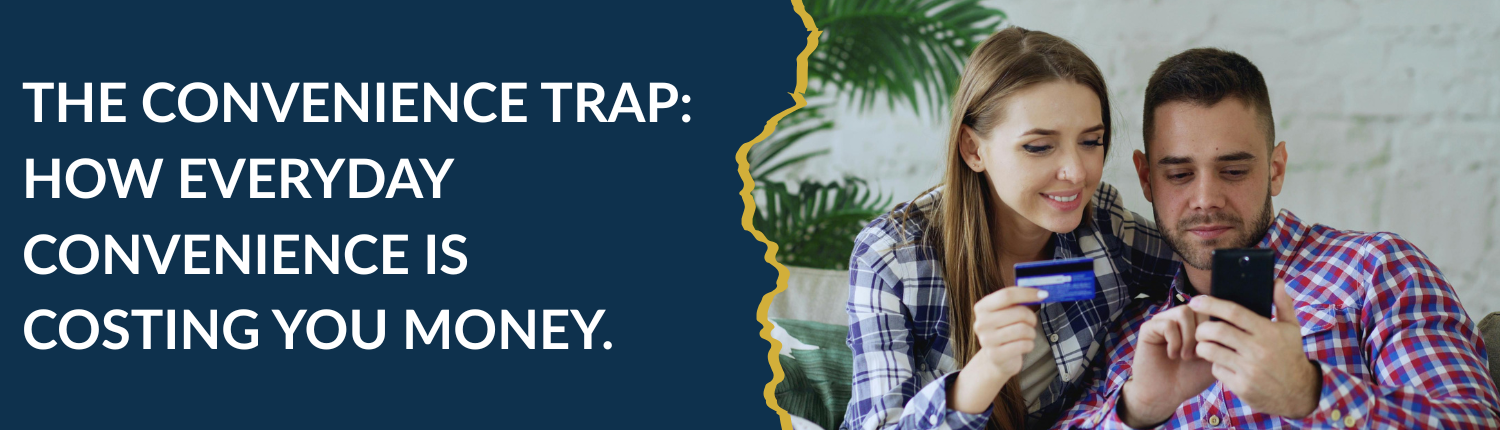
Rewards points, loyalty programs, buy-now-pay-later services, fast food apps, and the latest trend – getting discounts at restaurants and bars by scanning a simple QR code – seem like great perks. Who wouldn’t want $10 off their meal or drinks, right?
But have you ever stopped to think about what’s really happening?
These seemingly harmless conveniences are all designed to encourage one thing: digital spending. With just a tap on your phone or app, you’re being conditioned to move further away from cash – away from the tangible experience of money – into a world of digital dependency.
And it’s not just the big purchases that can cause a problem. Sometimes it’s the little taps, transactions and conveniences that slowly add up without you really noticing.
We’ve explored this in more detail in our article the tap that’s bleeding you dry, because when spending becomes effortless, it can also become almost invisible.
Convenience Or Control? How Convenience Affects Your Money:
Look around. Life has been engineered for your ease: fast payments, quick meals, and effortless purchases. But behind the facade of convenience lies a different reality. Every small choice you make – to tap, to scan, to opt for fast food instead of cooking – slowly trains you to prioritize ease over your own self-reliance.
At the end of a busy day, you feel you deserve a treat (a belief you’ve been subtly trained to accept). You work out, get hungry, and instead of cooking a fresh, nutritious meal, it’s easier to grab takeout using your app, earning points and saving a few dollars. You feel accomplished, relaxed even, but what’s really happening?
You’re being conditioned to embrace convenience at the cost of your independence.
And this is where convenience can become a budgeting problem.
Saving a few dollars on one transaction doesn’t necessarily mean you’re saving money overall. If convenience encourages you to make more frequent purchases, the small amounts can become a significant part of your weekly spending.
We’ve explored this before in our cooking article, 4 Meals for $20.00 looking at how the convenience of takeaway and fast food can quickly become an expensive habit when you’re trying to manage a household budget.”
How We’re Being Trained To Spend:
- You’ve been trained to pay with points and apps, abandoning cash.
- You’ve been trained to scan your own groceries instead of interacting with people.
- You’ve been trained to see cooking as “hard” and fast food as a solution.
- You’ve been trained to outsource life’s essentials, relying on digital systems to manage your world.
The result? You’re losing vital life skills like budgeting, cooking, and even the simple ability to handle cash. Your children might never have seen real money, and budgeting becomes a distant memory as digital payments blur the line between what you earn and what you spend.
And that’s the real issue.
It’s not necessarily that you don’t earn enough. It’s that you can lose awareness of where your money is actually going.
Learning how to budget isn’t about restricting every dollar you spend. It’s about understanding your money well enough to make deliberate choices about it.
If you’ve never really learned how to do that, our article start learning how to budget and save thousands in the process is a good place to start.
The Cost Of Convenience On Your Money & Financial Independence:
The more you rely on digital systems, the more you can surrender control. Digital wallets and rewards programs may feel modern and efficient, but they can also create stress and confusion. When spending becomes frictionless, it becomes easier to spend without thinking. And when you’re already busy, tired and distracted, convenience can quickly win over conscious decision-making.
The convenience trap isn’t necessarily about one huge financial mistake. It’s the accumulation of small decisions.
The tap. The takeaway. The delivery fee. The subscription. The “it’s only $10” purchase.
One transaction might not seem important. Repeated over weeks, months and years, they can become part of a much bigger spending pattern.
This is why understanding your actual cash flow matters.
Ask Yourself: Do You Really Know How Your Money Works?
- Do you truly know how your money flows?
- Can you track your spending without an app?
- Can you confidently budget for your future?
For many, the answer is no. And that’s by design.
If you’re reading those questions and thinking, “actually, I don’t really know,” you’re not alone.
And this is where the difference between simply having a budget and actually understanding your money becomes important.
If you’re wondering what help with this can actually look like, our article what is a budget coach and do I need one explains what a budget coach, money coach or financial coach actually does, and why budgeting isn’t simply about creating another spreadsheet and hoping for the best…
Reclaim Your Freedom: Take Control of Your Money:
Convenience isn’t the problem – it’s how it’s used to separate you from your independence and self-sufficiency. You’ve been trained to depend on systems that strip away your sovereignty and vital skills. But it’s not too late to change.
Here’s how…
Learn to Budget: Take Control of Your Money:
- Learn to Budget
When you learn how to take control of your money, you’ll discover that clarity is power.
A real budget gives you visibility over your income, your spending, your savings and your financial goals.
It allows you to make decisions before the money disappears rather than wondering where it went afterwards.
- Cook Your Own Meals
Rediscover the joy of healthy, homemade food.
Cooking doesn’t have to mean complicated recipes or hours in the kitchen.
It can simply mean planning ahead, buying deliberately and making your food work harder for your household budget.
- Grow Your Own Food
Even a small garden can make a difference.
Growing some of your own food isn’t just about saving money.
It’s about reconnecting with the basic skills that allow you to become less dependent on convenience.
- Be Self-Sufficient
Regain skills like managing cash, cooking, planning and making conscious spending decisions.
Yes, learning these skills takes time and effort.
But once you know them, you’ll have tools that no digital system can take away.
And taking control of your finances can create opportunities far beyond simply spending less.
For example, if buying a home is one of your goals, understanding your actual cash flow and spending habits can be just as important as getting loan approval. We explore this in our article why first home buyers need a finance coach, not just a broker.
Financial independence isn’t simply about having more money.
It’s about having the knowledge, skills and confidence to manage what you have.
Financial Coaching: When You Need More Than Another Budget:
Sometimes you know what you should be doing with your money, but you still can’t seem to make it happen.
You may have tried budgeting apps, spreadsheets, financial calculators or simply promising yourself you’ll “do better next payday”.
That’s where a finance coach or money coach can help.
A budget coach isn’t a financial advisor, and the two roles aren’t interchangeable. If you’re wondering about the difference, we’ve explained it in budget coaching VS financial advisor, what’s the difference?
The difference matters because financial advice and budget coaching solve different problems.
A finance coach or budget coach helps you understand your actual day-to-day numbers, your spending, your cash flow and the behaviours sitting underneath your financial position.
Your Money Should Support Your Goals:
Taking control of convenience spending isn’t just about having a few extra dollars in the bank.
It’s about what those dollars can eventually help you achieve.
Maybe it’s getting out of debt.
Maybe it’s building savings.
Maybe it’s buying your first home.
Maybe it’s simply having enough breathing room that the third week of every month doesn’t feel like a financial emergency.
For first home buyers in particular, the difference between being told you can afford a mortgage and actually knowing you can afford the life that comes with it can be enormous.
We’ve explored that issue in why first home buyers need a finance coach, not just a broker.
The goal isn’t to take control of your money for you.
The goal is to understand it well enough that you can make confident decisions about your future.
A Final Thought: Take Back Control of Your Money and Future:
What happens when the internet goes down or the power grid fails? Will you and your family know how to manage without the digital systems you rely on?
Convenience may feel like freedom, but it’s a trap designed to limit your choices and keep you dependent. It’s time to break free. Take back control of your life, your money, and your future. Live with purpose, not by default.
The life you deserve is waiting.